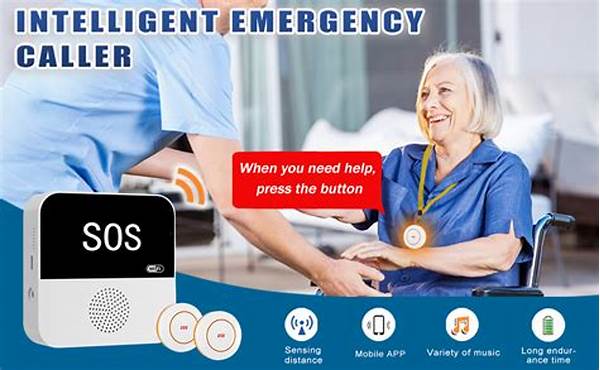
When technology blends seamlessly with human lives, extraordinary possibilities emerge. In a small suburban neighborhood, where houses lined up quietly under the watchful stars, lived an elderly woman named Margaret. Her days were filled with warmth from cherished memories, but her nights were often laden with a tinge of fear. Her son, traveling frequently for work, had gifted her a new device—a voice-controlled emergency call system. Little did Margaret know, this device would soon turn into her lifeline.
The Dawn of a Safer Era
Margaret was initially skeptical of the voice-controlled emergency call system. She questioned if something so intangible could protect her in times of need. However, as days passed, she grew accustomed to its reassuring presence, akin to that of an old friend vigilantly watching over her. One stormy evening, while reading in her favorite armchair, Margaret felt a sharp pain in her chest. Panic ensued as the room spun around her. In that moment of crisis, she remembered her son’s words and called out to the device. Calmly and efficiently, the voice-controlled emergency call system activated, summoning help in her desperate hour. The ambulance arrived just in time and Margaret’s life was saved, highlighting a new era where technology safeguarded the vulnerable.
Her neighbors, fascinated by her experience, began to see the device not merely as technology but as a guardian angel, ever-ready to intervene. Margaret’s story spread, transforming skepticism into belief. This voice-controlled emergency call system became a symbol of modern safety, knitting technology and humanity closer together. For many in the community, it offered peace of mind, knowing that help was only a voice command away, eliminating the barriers of age, illness, or even panic in times of emergency.
Embracing New Technology
The voice-controlled emergency call system surpassed its mechanical purpose, weaving into the lives of its users with a narrative deeply intertwined with emotion and trust. Margaret’s experience opened up conversations that meandered through living rooms and cafeterias alike, drawing people in with its promise of security and control. The initial reluctance of many, like Margaret, was dissolved by tales of timely interventions and life-saving moments that this technology facilitated.
As acceptance grew, so did curiosity. The technology, which once seemed mysterious, became a topic of communal discussion, leading to a broader acceptance and understanding of how it functioned. It no longer felt foreign; instead, it was a comforting addition, quietly integrating itself into the routine sounds of life, harmonizing seamlessly with the rhythm of daily existence. The voice-controlled emergency call system became more than just an emergency device, but a testament to human ingenuity and resilience—an emblem of the bridge between human needs and technological advancement.
Five Key Narratives
1. The voice-controlled emergency call system is not just a gadget; it’s a beacon of hope for the elderly and vulnerable, providing a comforting presence in their living spaces, assuring them assistance is always within their spoken word.
2. When anxiety turns chaotic in an emergency, the voice-controlled emergency call system steps in as a calm voice, directing aid precisely when it is most needed, offering a silent assurance amidst the chaos.
3. The story of the voice-controlled emergency call system is rooted deeply in the human spirit, where necessity meets innovation, crafting a tale of security woven with threads of technology and care.
4. Each activation of a voice-controlled emergency call system signifies a narrative unfolding—a narrative where the user is not alone, but rather accompanied by a virtual guard, ready to act at their cue.
5. Communities rally around the anecdotes birthed from the interactions with the voice-controlled emergency call system, where each recounting serves as testimonial evidence of lives saved and prevented calamities.
Bridging Technology and Human Needs
For many like Margaret, embracing technology such as the voice-controlled emergency call system became more than a necessity—it became an ally. The device was ready to listen, overcome with silence yet resonant with potential. Its presence reframed solitude, offering companionship in the form of ever-present aid. Many embraced it like an old companion, tested and true, present but unobtrusive, offering security without demanding constant attention.
The shift in perception was marked by the awareness that with each voice-controlled call, life was valued and preserved. No longer did it feel like an intrusion; instead, it appeared as a safekeeper, tenderly guarding the sanctity of life within each household it silently served. The device’s reliability redefined the idea of home safety, with residents across the neighborhood finding comfort in the fact that, irrespective of their circumstances, help was a mere command away; the invisible thread binding technology and human needs.
The Unseen Guardian
The voice-controlled emergency call system, though a mechanical device, was imbued with the very essence of human empathy. It carried stories—a repository of trust and reliability. In moments of serenity or distress, its function remained constant, reactive yet proactive, ready to ensure that help arrived in the nick of time. Each tale of timely intervention served as another weave in the neighborhood’s tapestry of mutual understanding and social safety.
Throughout the community, the voice-controlled emergency call system transformed from an obscure technology into a beloved presence. Neighbors frequently exchanged stories over garden fences and at community meetings, narrating their integration of the device into their daily lives. Soon, it became more than an emergency gadget; it evolved into a critical element of community safety, inspiring many to reconnect with their autonomy and confidence, restoring a sense of balance in their lives.
A Safety Net Woven with Trust
The innovation that initially seemed daunting, over time, wrapped itself around the lives of its users like a safety net. The voice-controlled emergency call system, once an enigma, now functioned as a silent partner, dedicated solely to protection. People of all ages began to see its potential not only in emergencies but as part of a broader lifestyle choice—one of independence supported by technology.
In households scattered across different communities, this newfound sense of security was celebrated. Celebrations weren’t loud or ostentatious; they were quiet affirmations of lives lived with lesser fear. The quiet hum of the voice-controlled emergency call system became a testament to progress—a digital lullaby for those seeking peace of mind amidst the uncertainties of life. Through its seamless functionality, it connected the past with the future, narrating a story of safety, one household at a time.
Summary of a New Era
The voice-controlled emergency call system, once a marvel of technological innovation, soon became an essential component of daily life. It wasn’t simply a device; it was an empathetic extension of the household, eager to serve and protect. Margaret’s tale resonated across the neighborhood, like ripples spreading through a still pond, drawing people towards the security it symbolized.
With each story of relief came a sense of collective appreciation for the peace it resurrected in the community’s consciousness. It wasn’t just about safeguarding lives; it was about restoring a community’s faith in the power of human-centric technology. Each narrative echoed Margaret’s faith in the voice-controlled emergency call system, a faith that now thrived throughout the community, binding them together with threads of shared experiences and aspiring futures. This narrative validated the marriage between humanity and technology, one spoken word at a time, highlighting that in the journey of life, companionship, trust, and safety were only a call away.