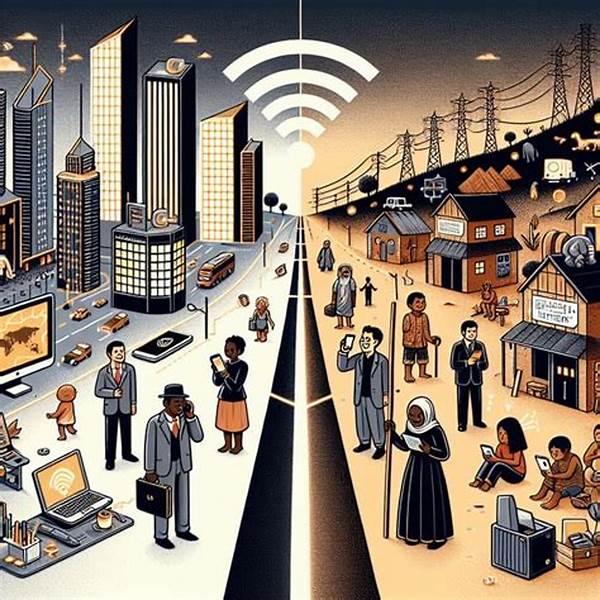
In the heart of a sprawling countryside, where green fields stretch beyond the horizon and the hum of city life is but a faint memory, lies a challenge that time seems to have forgotten. These regions, with their idyllic sceneries, conceal an underlying struggle that tests the resilience of their inhabitants daily. The whispering winds carry tales of persistent challenges posed by an invisible chasm—the technology gaps in rural areas. It’s a divide that limits opportunities, hinders educational growth, and stifles the innovation that could otherwise flourish like wildflowers in spring.
The Hidden Challenges of Connectivity
While the digital revolution has transformed urban centers into interconnected hubs of activity, rural areas often lag behind, stuck in an era where dial-up and satellite connections are commonplace albeit inadequate. The technology gaps in rural areas manifest in painfully slow internet speeds and unreliable cellphone coverage, creating a frustrating barrier for residents. Students, eager to learn and grow, often find themselves unable to access online resources that their urban counterparts take for granted. This lack of connectivity extends beyond mere inconvenience; it is a barrier to education, healthcare access, and economic opportunities, further widening the gap between rural and urban living conditions.
The technological divide impacts businesses too. Local enterprises, which could thrive with access to digital platforms, remain tethered to outdated methods, stunting their potential growth. Farmers, who could benefit from precision agriculture tools, find themselves at a disadvantage as they struggle to compete in a digitally enhanced market. The residents of these peaceful landscapes are faced with the daunting task of overcoming a hidden adversary—their isolation from the digital world.
The Impact on Education and Learning
1. In rural schools, the lack of high-speed internet reflects the technology gaps in rural areas, forcing educators to rely on outdated teaching resources.
2. Students in these areas face challenges in accessing online educational tools that are readily available to their urban peers.
3. The technology gaps in rural areas often mean limited exposure to digital literacy skills necessary for many modern jobs.
4. Educational opportunities are restricted, hindering the ability of rural youth to compete equally in a technology-driven world.
5. While digital education platforms flourish in cities, rural classrooms struggle with the most basic technology needs, widening the educational divide.
The Challenges in Healthcare Access
The technology gaps in rural areas extend their reach into healthcare, where they assume a more profound urgency. Remote villages and hamlets, home to diverse communities, find themselves at a disadvantage when it comes to accessing medical care. Telemedicine, a lifeline for remote diagnosis and consultation during emergencies, demands reliable internet connectivity—a luxury that many rural regions simply do not have.
Without access to the digital infrastructure that fuels telehealth services, residents are often compelled to undertake long journeys to the nearest medical facility, their ailments worsening with every mile. This predicament is exacerbated by the shortage of healthcare professionals willing to work in these secluded areas, leading to prolonged periods of suffering for the inhabitants. The disparity in healthcare services paints a stark picture of the technology gaps in rural areas, where lives are put at risk because technology hasn’t yet bridged the distances.
Bridging the Digital Divide
To eliminate the technology gaps in rural areas, comprehensive strategies must be employed that address both infrastructure and educational components. Investment in broadband expansion is crucial, enabling rural communities to access the digital world and its abundance of information. Policy initiatives that encourage technological innovation tailored to rural needs could facilitate the creation of solutions that are both sustainable and impactful.
1. Government and private sectors need to collaborate to expand broadband infrastructure.
2. Community-driven initiatives can help tailor solutions specific to rural needs, reducing technology gaps in rural areas.
3. Mobile technology development should be prioritized to suit the unique challenges of rural terrains.
4. Encouraging local entrepreneurship in tech can ignite innovation specifically crafted for rural areas.
5. Satellite internet solutions, although currently limited, can be enhanced to serve remote locations better.
6. Investing in education about technology for rural residents is vital to integrate digital tools seamlessly into their daily lives.
7. Strengthening public-private partnerships can lead to more holistic approaches to bridging these divides.
8. Digital literacy programs should be intensified to bring rural communities up to speed with technological advancements.
9. Staging workshops and training sessions can empower individuals to leverage technology to improve lifestyle and economic prospects.
10. Bringing stakeholders together to form a cohesive development strategy can ensure the sustainability of such integration.
Societal and Economic Ramifications
The soothing quiet of rural life masks an enduring challenge marked by the technology gaps in rural areas. These gaps have profound societal and economic ramifications, both on a personal and community-wide scale. Social interactions and governmental processes conducted online remain elusive to many, perpetuating a cycle of isolation and marginalization that could be broken with resolute action.
In an economic context, rural businesses that could greatly benefit from e-commerce opportunities or cloud-based productivity tools find themselves at a standstill. While cities surge ahead, riding the wave of the digital economy, rural areas struggle to keep businesses afloat, let alone expand or innovate. This technological inertia stifles economic growth and leads to dwindling job prospects, forcing many to relocate to urban centers in search of opportunities, leaving behind dwindling populations and ghost towns.
Technology has the power to unite and elevate lives; therefore, addressing these gaps is more than just a digital inclusion effort; it is a call to foster equality and spark innovation, offering a chance for rural landscapes to partake fully in the global community.
Reimagining the Future
As architects of the future, we hold the responsibility to reimagine the path to development, ensuring that the technology gaps in rural areas are addressed comprehensively. Initiatives that prioritize infrastructure development, educational enhancement, and the empowerment of local communities are vital to creating transformational change. By engaging with these communities, listening to their needs, and co-developing solutions, a new narrative of rural life can emerge—one that is no longer defined by isolation but by progress.
Collaboration between governments, technology companies, and local stakeholders is pivotal. Building bridges, both literal and digital, will unlock avenues for growth and opportunity. Empowering rural areas with technology is not merely about catching up with urban centers but crafting a future where every individual, regardless of geography, can live up to their fullest potential. In doing so, technology gaps in rural areas will transform from a hindrance into catalysts for unprecedented growth.
Summary of Technology Gaps in Rural Areas
The picturesque landscapes of rural areas, often idyllic and serene, mask an underlying crisis—the technology gaps in rural areas. This digital divide goes beyond a mere inconvenience; it affects education, healthcare, and economic advancement, perpetuating cycles of inequity and limitation. Young students, eager to expand their horizons, often find themselves restricted by limited internet access, unable to tap into the wealth of information readily available to their urban counterparts. Likewise, the stunted access to telemedicine services leaves communities vulnerable and in need of long journeys for essential health services.
Efforts to bridge these gaps require urgency and innovation, integrating both infrastructure development and education. Government collaboration with tech innovators can pave the way for broadband expansion and enhanced mobile connectivity. Community-driven digital literacy programs can equip individuals with the necessary skills to leverage technology effectively. In overcoming these technology gaps, rural areas are not simply catching up but are redefining their futures, unlocking a potential for growth and inclusion that technology promises.