In a bustling city filled with the humdrum of daily life, Maria found herself on a journey she had never anticipated. It all began when her beloved car, the very one that carried her through the winding roads of her life, was damaged in an unforeseen accident. With an anxious heart, she embarked on the tedious task that lay ahead — dealing with her insurance claim. As Maria navigated the labyrinthine processes of paperwork, approvals, and phone calls, she dreamed of a world where simplifying insurance claim processing wasn’t just a distant hope but a tangible reality. This narrative isn’t just Maria’s; it’s a universal story, echoing the frustrations and desires of many.
The Need for Simplification
Each step in Maria’s journey illustrated the urgent need for simplifying insurance claim processing. As she pored over complex documents and faced endless waiting periods, it became apparent how this cumbersome process affected emotionally and psychologically exhausted individuals during times of distress. Simplifying insurance claim processing would alleviate these burdens, offering a smoother, less daunting experience for all.
Maria often spoke with friends who faced similar ordeals. They shared tales, each different yet bound by the common thread of procedural complexity. The endless back-and-forth between insurance companies and policyholders underscored the necessity for change. Simplifying insurance claim processing could transform these stories into narratives of efficiency and relief.
For Maria, the thought of technology playing a role in simplifying insurance claim processing seemed nothing short of miraculous. Innovations like digital interfaces and AI-driven assessments promised to replace paperwork chaos with clarity and convenience. Imagining a world with streamlined claims, Maria felt hope blooming amidst her challenges.
Ultimately, the heart of simplifying insurance claim processing lies in understanding the policyholder’s needs. It calls for active listening and designing systems that prioritize client-friendly interfaces. Maria’s journey through her claim process illustrated the precious human touch that technology must accompany to truly make a difference.
Innovative Solutions for Streamlining
Maria’s ordeal highlighted an industry ripe for transformation. Simplifying insurance claim processing can now harness the power of cloud computing, providing instant data access and accurate claim verification. People, like Maria, would benefit immensely from a system where automation takes the front seat, ensuring their stories are heard and resolved promptly.
The digital age opens doors to potential solutions previously unimaginable. Investing in user-centric applications could revolutionize how insurance claims are filed and tracked. Simplifying insurance claim processing through these digital pathways offers potential relief akin to a soothing balm on the proverbial paperwork burns that once plagued Maria and countless others.
Maria clung to hope throughout her experience, envisioning a future where every click simplified the process. Insurance companies embracing tech trends are likelier to enhance customer satisfaction by simplifying insurance claim processing — a shift poised to redefine industry standards.
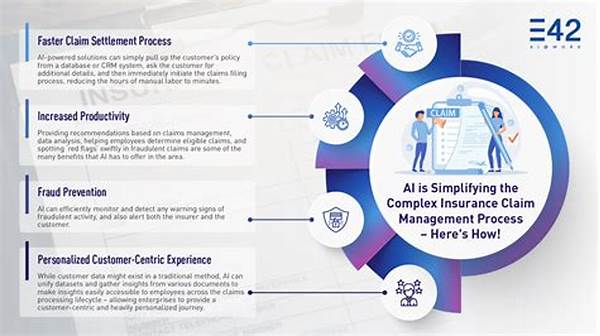
Simplifying insurance claim processing could foster a landscape where artificial intelligence learns from past claims and predicts potential complications, proactively offering solutions. This would transform a reactive system into a preventative experience, minimizing issues before they even arise.
Ultimately, these changes could signify an era where insurance processes reflect the fast-paced, technologically advanced world we live in. May Maria’s story and those alike inspire innovations that streamline, simplify, and humanize the insurance journey, making simplifying insurance claim processing an achievable reality.
Unseen Benefits of Process Simplification
For Maria, it’s not just about speeding up the process; it’s about enhancing trust. Simplifying insurance claim processing can build confidence in the system, allowing policyholders to feel secure in their coverage during their most vulnerable moments. It can transform stress-filled scenarios into opportunities for reassurance and support.
Innovation can also open doors to new communication channels. By simplifying insurance claim processing, companies can transform how they interact with their clients. Providing real-time updates and multiple platform access points empowers policyholders with the information they need, when they need it.
Imagine a system where claims are processed in days rather than weeks. Simplifying insurance claim processing translates into reduced operational costs for companies and increased customer satisfaction. It’s a win-win that paves the way for more competitive markets and better consumer experiences.
Furthermore, education plays a pivotal role. Simplifying insurance claim processing includes educating policyholders about their policies and claim history. By demystifying the language of insurance, individuals like Maria can feel more confident and capable when managing their claims.
Simplifying insurance claim processing promises to enhance the industry’s image, turning the tides from laborious endeavors to streamlined experiences. Modernizing these processes not only supports clients but also energizes company employees, making efficiency and satisfaction the new norms of the day.
Anticipating Future Transformations
In Maria’s narrative, the integration of AI wasn’t just speculative; it was inevitable. Simplifying insurance claim processing through AI isn’t about replacing humans; it’s about freeing them to focus on personalizing service delivery where it truly matters, thus extending warmth and empathy amid digital efficiency.
One can foresee a future where virtual assistants become pivotal, guiding policyholders step by step through the claims process. Simplifying insurance claim processing using smart chatbots creates an interactive, stress-free environment where complex information is readily accessible.
The rise of interconnected devices, or the Internet of Things (IoT), promises further enhancements. Simplifying insurance claim processing could see smart sensors instantly alerting insurers of incidents, expediting assessment and claim activation long before Maria even makes the call.
Technological advances aside, simplifying insurance claim processing involves fostering industry-wide collaborations. Insurers, technologists, and consumer advocates must work collectively to ensure that innovations meet practical needs without sacrificing personal touches with clients who value human interaction.
In Maria’s dream world, technology empowers policyholders through a well-oiled, seamless process that embodies care and efficiency. Simplifying insurance claim processing for her isn’t just a catchphrase; it’s a movement that holds power to redefine workflows and set free policyholders to focus on recovery, not red tape.
Embracing a New Era Together
As Maria reached the end of her journey, satisfaction and relief enveloped her. The road had been long and winding, but she could see the horizon of smooth, simplified processes waiting ahead. For those engaged in simplifying insurance claim processing, collaboration is the key.
Service providers, tech companies, and policyholders must unite to fashion a more intuitive landscape. By enhancing efficiencies and catering to client needs, simplifying insurance claim processing can elevate the entire industry while creating a more compassionate world for those in need of care.
Maria’s story may be one among many, but it boldly echoes the potential of what can be achieved through unity and innovation. Simplifying insurance claim processing is not just a goal; it’s a universal necessity.
The developments that emerge from this shared venture have the power to navigate the intricate junctures of insurance with grace and empathy. As Maria’s heart swells with hope, she knows this change is possible as long as every voice within the industry heralds the call for a new, transformative era.
Nurturing Change within the Insurance Industry
Reflecting on her ordeal, Maria realized the essence of nurturing change lies within understanding. Simplifying insurance claim processing requires embracing diversity in policyholders’ experiences and leveraging them to mold more empathetic, user-focused systems that cater to individual needs while addressing insurance complexities.
Such changes encapsulate the industry’s collective responsibility to prioritize transparency and trust. Simplifying insurance claim processing also means simplifying communication, ensuring policyholders comprehend their coverage and confidently navigate through processes.
Maria’s story brims with lessons for the industry’s future. By leveraging data analytics, insurers can tailor services to specific demographics, predicting and simplifying insurance claim processing for unique needs across the board.
Innovative partnerships can further fuel this transformation. Bringing together experts from technology, communications, and insurance can catalyze change by offering comprehensive services. Simplifying insurance claim processing thereby emerges not just as a goal but as a movement rooted in collaboration, collective growth, and societal impact.
In essence, Maria’s narrative serves as a beacon lighting the path toward forward-thinking improvements. Insurers, tech companies, and policyholders stand poised to step into this futuristic realm, creating change that is as sustainable as it is impactful, all through the lens of simplifying insurance claim processing.