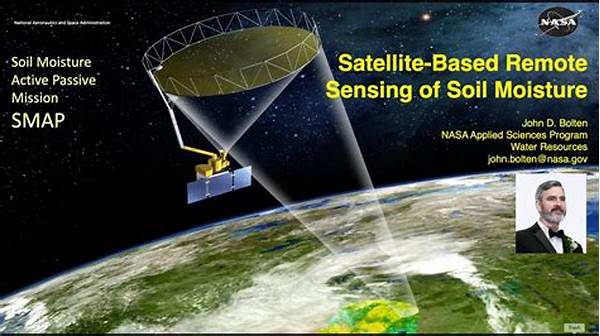
In the vast expanse of space lies a network of satellites that silently orbit our planet, watching, learning, and collecting data. Among the myriad tasks they perform, one of the most critical is observing moisture levels across various terrains. Satellite-based moisture observation has become an invaluable tool in understanding our planet’s health and future. From the deserts of Africa to the rainforests of South America, these orbiting eyes capture and relay critical data that help us comprehend the ever-changing relationship between earth and sky.
The Importance of Satellite-Based Moisture Observation
Satellite-based moisture observation provides indispensable insights into the intricate dance between water, land, and atmosphere. Every day, satellites equipped with advanced technology scan the earth’s surface, gathering data on soil moisture levels, atmospheric humidity, and precipitation patterns. This information is pivotal for industries ranging from agriculture to disaster management.
With the capability to monitor vast areas, satellite-based moisture observation helps in predicting droughts and managing water resources more effectively. It plays a critical role in early warning systems that alert populations about upcoming floods or severe weather conditions. Furthermore, this technology is essential for agricultural planning, aiding farmers in determining the best times to plant and harvest crops based on soil moisture content.
In recent years, as climate change continues to impact global weather systems, the relevance of satellite-based moisture observation has only increased. The data gathered not only assists in understanding current environmental changes but also provides a foundation for future predictions. As our planet continues to evolve, the importance of these satellite systems in maintaining sustainable ecological practices cannot be overstated.
Advantages of Satellite-Based Moisture Observation
1. Satellite-based moisture observation allows for real-time data collection, offering immediate insights into moisture levels across different terrains.
2. These observations cover vast geographic areas, providing data that is impossible to gather through traditional ground-based methods.
3. By correlating moisture levels with weather patterns, satellite-based technology aids in more accurate weather forecasting.
4. The data helps scientists study the long-term effects of climate change on global water resources.
5. Satellite-based moisture observation supports agricultural productivity by helping farmers optimize irrigation and conserving water resources.
Technological Contributions to Satellite-Based Moisture Observation
The technology driving satellite-based moisture observation has seen significant advancements over the years. Modern satellites are equipped with sophisticated sensors that measure moisture content using various techniques. Passive and active remote sensing methods allow for precise moisture measurement, regardless of weather conditions.
Satellite-based moisture observation technologies are pivotal in addressing global water scarcity issues. Through the advanced imaging capabilities of satellites, nations can now craft targeted strategies to manage and conserve their water resources. Moreover, by tracking moisture fluctuations over time, scientists are developing predictive models to forecast severe weather events more accurately.
The collaboration between international space agencies and governments is fostering technological innovations in this domain. With more powerful satellites being launched regularly, the scope and accuracy of satellite-based moisture observation continue to improve, providing vital data that shapes our understanding of environmental processes on Earth.
Challenges in Satellite-Based Moisture Observation
1. Despite its potential, satellite-based moisture observation faces technical limitations, such as resolution constraints that can affect data accuracy.
2. The high cost of satellite development and deployment impedes widespread adoption of this technology.
3. Interpretation of satellite data requires advanced technological infrastructure and expertise, posing challenges for developing nations.
4. Satellite-based moisture observation is susceptible to atmospheric interference, which can occasionally skew data readings.
5. Maintaining a network of functioning satellites requires substantial international collaboration and coordination.
6. Data from satellite-based moisture observation needs thorough analysis for meaningful application in local contexts.
7. There’s a need for continuous development to ensure data remains relevant amidst rapidly changing climatic conditions.
8. Satellite data must be integrated with ground-based observations for comprehensive analysis.
9. Ensuring real-time data delivery can be challenging due to technical and logistical limitations.
10. Advocacy for open access to satellite data remains essential for fostering global scientific collaboration.
Satellite-Based Moisture Observation and Climate Change
As climate change accelerates, so does the need for precise environmental monitoring technologies like satellite-based moisture observation. These systems provide real-time data to assess the impacts of climate change across different ecosystems. Through precise measurements of moisture content, we can track how warming temperatures affect precipitation patterns and surface water availability.
Satellite-based moisture observation is indispensable in the battle against climate change. It helps policymakers develop adaptive strategies to mitigate potential water shortages or surpluses. By identifying areas at greatest risk of drought or flooding, resources can be deployed efficiently to protect those most vulnerable.
Moreover, this technology contributes to global efforts in carbon management. Moisture levels directly affect carbon storage and release in soil, providing critical data in shaping our approach to emissions control. As we endeavor to curb the effects of climate change, satellite-based moisture observation emerges as a linchpin in crafting informed, sustainable practices to safeguard our planet’s future.
The Future of Satellite-Based Moisture Observation
Looking forward, the future of satellite-based moisture observation is one of immense possibility. As technology evolves, greater data precision and broader coverage are expected to shape our understanding of Earth’s hydrological processes. Innovations in sensor technology promise even more accurate moisture readings, allowing scientists to unlock the mysteries of water dynamics on a global scale.
Satellite-based moisture observation will play a crucial role in developing early warning systems for extreme weather events, offering communities the chance to prepare and mitigate potential damages. It will continue to drive agricultural efficiencies and ensure food security worldwide.
Collaboration between nations and space agencies will be paramount as we collectively enhance our satellite infrastructure. Sharing data and insights will bolster our collective knowledge, leading to more informed decisions in environmental policy. As the world continues to grapple with the environmental challenges of today, satellite-based moisture observation remains a beacon of hope, guiding us towards sustainable solutions and a better understanding of our dynamic planet.
Summary
In conclusion, satellite-based moisture observation signifies a vital leap in environmental science, providing us with the tools necessary to navigate the multifaceted issues of climate change, agricultural management, and water conservation. These technological systems deliver crucial data that informs policy-makers, scientists, and communities worldwide.
As we deepen our reliance on satellite-based moisture observation, it is necessary to address existing challenges, such as limited access to data and high operational costs. By fostering international cooperation and promoting open access to satellite data, we can enhance our response to global environmental changes.
The story of satellite-based moisture observation is one of technological triumph and innovation, a narrative that continues to evolve as we explore new frontiers in space and Earth science. As these satellites orbit silently above, their observations propel us forward, enhancing our understanding and stewardship of this delicate planet we call home.