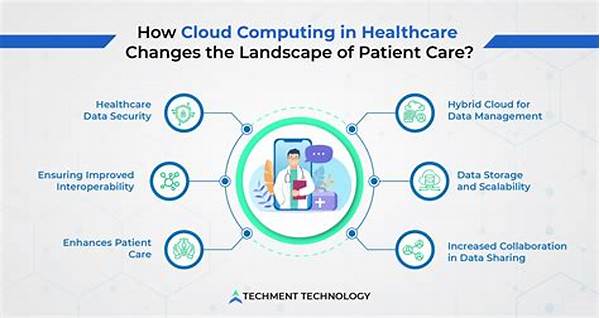
In the heart of a bustling city, where the rhythm of life echoes through the honking of car horns and the chatter of pedestrians, a quiet revolution is taking place in the healthcare industry. Imagine a world where patient records glide through the internet like whispers on the wind, reaching doctors’ desks with the speed of thought, yet protected by security stronger than any fortress. This is the reality unfolding as healthcare systems embrace the digital embrace of the cloud. Healthcare cloud system integration is not just a trend, but a transformation. It’s the keystone for a modern healthcare delivery framework, enabling seamless collaboration, swift access to information, and robust security.
The Evolution of Healthcare Cloud System Integration
The journey of healthcare cloud system integration begins in the corridors of hospitals and clinics grappling with mountains of paperwork. The integration process transforms these archaic systems, melding them into a unified, cloud-based entity. In these digital hallways, healthcare providers find solace in the swift access to comprehensive patient histories. With a few clicks, a doctor in Los Angeles can consult a specialist in Tokyo, reviewing X-rays and diagnoses in real-time. This integration facilitates a newfound nimbleness in treatment approaches, breaking the chains of geographical and temporal constraints.
The narrative of healthcare cloud system integration is also one of security and trust. As hospitals migrate data to the cloud, they wield the dual-edged sword of accessibility and vulnerability. The integration process is akin to crafting a work of art, where each brushstroke adds a layer of encryption, safeguarding sensitive patient information. This architecture fosters trust between patients and providers, who are assured that their medical records are as secure as if locked in a digital vault. As healthcare data traverses this invisible highway, it carries with it the promise of safety and confidentiality.
Doctors and nurses, once burdened by administrative tasks, now find respite in the automation afforded by healthcare cloud system integration. The narrative takes on a human touch as it improves the well-being of caregivers, allowing them more time to focus on patient care rather than paperwork. The systems’ capabilities extend beyond data storage, offering analytical insights that can predict disease outbreaks or assess patient risk factors, thus enhancing medical interventions. As the keystrokes of healthcare professionals echo through these digital realms, they tell a story of innovation meeting compassion.
Tailoring Solutions for Diverse Needs
Healthcare cloud system integration is a bespoke suit tailored to fit the unique needs of each healthcare provider. It’s not a one-size-fits-all solution but a customizable journey that aligns with the specific operational challenges of varying institutions. Specialist healthcare providers see the benefits of integration in streamlining operations and ensuring every aspect of patient care is data-driven and efficient.
The flexibility of healthcare cloud system integration allows small clinics to compete on equal footing with larger establishments. By unlocking resources previously restrained by budget constraints, these clinics can now offer superior services through cost-effective, scalable cloud solutions. This democratization of technology brings an equal opportunity revolution to healthcare providers around the globe.
Even within the cloud, there are layers of customization that empower healthcare providers. Each layer, intricately designed, serves a specific purpose, be it data storage, patient analytics, or secure communication channels. Healthcare cloud system integration maps out a journey that promises to enhance every aspect of medical practice.
Overcoming Barriers
Navigating the terrain of healthcare cloud system integration is not without its formidable challenges. Imagine a vast landscape dotted with regulatory hurdles, compliance challenges, and technological pitfalls. These obstacles make the journey arduous and complex, demanding careful strategy and execution. Yet, as each challenge is overcome, the narrative of integration weaves a tale of triumph and resilience.
The integration process demands an unwavering commitment to patient privacy and data security. It’s like constructing a fortress, with every wall fortified to repel intruders. Healthcare providers must navigate this intricate web to emerge victorious, and as they do, they carve out a safer, more efficient path for those who follow.
As healthcare cloud system integration progresses, it must adapt to a continuously evolving technological environment. This dynamic nature of technology means healthcare providers must remain vigilant, ready to pivot and adapt to the latest advancements. Yet, the narrative remains one of innovation, where adaptability is the hero driving progress forward.
A Bright Horizon for Healthcare Outcomes
With healthcare cloud system integration, the horizon is painted with the golden hues of improved patient outcomes. This integration marks a turning point where healthcare systems embrace data-driven decision-making, leading to more accurate diagnoses and personalized treatment plans. Imagine a world where healthcare is proactive rather than reactive, as data analytics anticipate patient needs before they arise.
The merger of healthcare and cloud technology fosters collaboration among providers, bridging the gap between specialists worldwide. This global network of information sharing elevates patient care, turning local clinics into interconnected hubs of medical expertise. It paves the way for extraordinary innovations and discoveries that redefine the limits of medical knowledge.
In this new era, healthcare cloud system integration allows for continuous improvement, as feedback loops refine processes and standardize quality. Patients benefit from shorter waiting times and more coordinated care, while healthcare workers thrive in an environment that values their expertise and nurtures their growth. This synthesis of technology and human touch tells a story of progress and the quest for excellence.
Shaping the Future with Data
As we look toward the future, healthcare cloud system integration serves as a beacon guiding us into uncharted territory. Data becomes more than just numbers; it transforms into stories—each dataset contributing to a narrative of human health. Through the lens of this integration, healthcare providers gain insights into complex conditions and uncover trends that define the future of medicine.
This integration not only revolutionizes patient care but also creates a symbiotic relationship between healthcare providers and technology. It’s a narrative where technology becomes an ally, a steadfast companion enhancing the capabilities of medical professionals. Through this understanding, the barriers between human insight and machine accuracy dissolve, allowing them to work hand in hand.
While the journey is long and challenges remain, the promise of healthcare cloud system integration is too great to ignore. It crafts a seamless experience for patients, bridging access and opportunity gaps, and above all, improving lives. As the story unfolds, healthcare systems worldwide will continue to evolve, driven by this powerful integration.
Envisioning the Continuous Journey
Moving forward, the story of healthcare cloud system integration is one that never truly ends. It’s a continuous journey of adaptation and improvement, inviting innovation and fresh perspectives. In this ever-evolving landscape, healthcare providers continue seeking better ways to harness technology to serve humanity.
The narrative concludes, for now, with a vision of a brighter future, where healthcare is synonymous with efficiency, security, and compassionate care. In this future, the boundaries of what is possible are constantly pushed, transforming challenges into triumphs and possibilities into realities. As healthcare cloud system integration continues its journey, it crafts a legacy of resilience, innovation, and the unwavering pursuit of better health for all.